What is gastrointestinal cancer ? symptoms & treatment

Gastrointestinal cancer is a general form of some cancers that is harmful to the digestive system. Any part of the digestive system like liver, pancreas, stomach, oesophagus, small intestine, gallbladder and biliary tract, bowel and anus if suffering from the malignancy of the cells then generally its called gastrointestinal cancer.
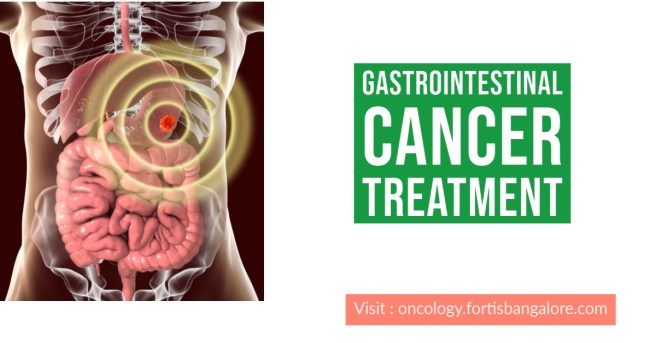
gastrointestinal cancer

Every year most of the people suffer from cancer of any of the digestive part. And every year a significant number of people die from this cancer as well.

Here some brief descriptions of a few kinds of GI cancer.

Oesophageal cancer

Oesophageal cancer usually happens in the tissues of oesophagus cells. The tube that conveys foods from mouth to stomach gets affected by this cancer. The impact can occur in any part of the organ, including different cell also.

Stomach cancer

Stomach cancer usually occurs in the cells of the stomach wall. These cells become malignant and grow abnormally without any control. The most usual form of stomach cancer is gastric adenocarcinoma. This occurs at the most inner layer of the human stomach. There is a gland that contains a fluid that helps in digestion by dividing the food.

Liver cancer

The liver is the second largest glands of the body and a major digestive organ. The liver gets affected in two way. The primary situation is if the cells of the liver itself get malignant, and the second situation is if some other part of the body gets affected by cancer and later it affects the liver.

Pancreatic cancer

Pancreatic cancer occurs when the pancreatic cell becomes malignant. Mostly exocrine cells get affected, which are pancreatic cells that help in digestion of food.

Symptoms

Unlike these types of GI cancer, there are some other GI cancer also, which are mentioned earlier have several impacts on human’s health. Here are some symptoms of different kinds of GI cancer.

Symptoms of oesophageal cancer

  • Swallowing with pain.
  • Major weight loss.
  • Extream fatigue problem.
  • Blood vomiting.
  • Heart burning.
  • Cough.

Symptoms of Stomach cancer

  • Lots of digestion problem like constipation, vomiting, diarrhoea.
  • Abdomen swelling.
  • Vomiting with blood.
  • Burping.
  • Bloating.
  • Heartburn.
  • Weight loss.

Symptoms of liver cancer

  • Loss of appetite and weight loss.
  • Tiredness and weakness.
  • Upper right side pain of abdomen.
  • Yellowish skin.
  • Fever

Symptoms of pancreatic cancer

  • Skin itching, jaundice.
  • Stomach, back and upper abdomen pain.
  • Unbelievable weight loss.
  • Diabetes.
  • Major constipation and diarrhoea.

Symptoms of small bowel cancer

  • Swelling, pain and cramps in the middle of the abdomen.
  • Lowering the number of red blood cells.
  • Major weight loss.
  • Vomiting

Symptoms of anal cancer

  • Bleeding with stool.
  • Secretion of mucus from the anus.
  • Itching, pain and irritation around the anus.
  • Abnormal bowel movement.
  • A lump occurs near the edge of the anus.
  • Rectum pain.

Treatment

There are also other kinds of gastrointestinal cancer that occurs in the upper and lower part of the body. Prevention is required to stop the other cells getting affected by the malignant cells. So some important treatment strategies for the GI cancer are

  • In the case of stomach cancer depending upon the affected area, gastrointestinal cancer surgery is preferable for the initial stage of cancer. In the case of major and advance stomach cancer, chemotherapy and radiotherapy are also recommended by the doctors.
  • Surgery is also a primary solution for pancreatic cancer, depending on the age of the patient, size of cancer and the affected area of the body. Surgery removes the malignant pancreatic cell and prevents it from spreading further. If the cancer is advanced, then surgery won’t be sufficient. Radiotherapy or chemotherapy is much needed in that case.

Unlike these two examples, it is applicable to all kind of GI cancer for prevention. The proper gastrointestinal cancer treatment is always necessary for every GI cancer patient to get rid of it completely. Unlike other countries in the world, the rate of GI cancers has raised predominantly due to the change in the lifestyle. People consume lots of alcohol, tobacco and unhealthy foods. In India cancer hospital in Bangalore gives the proper and best treatment to the cancer suffering patient with excellent medical and doctor facility.
What is the prognosis and life expectancy of lung cancer?

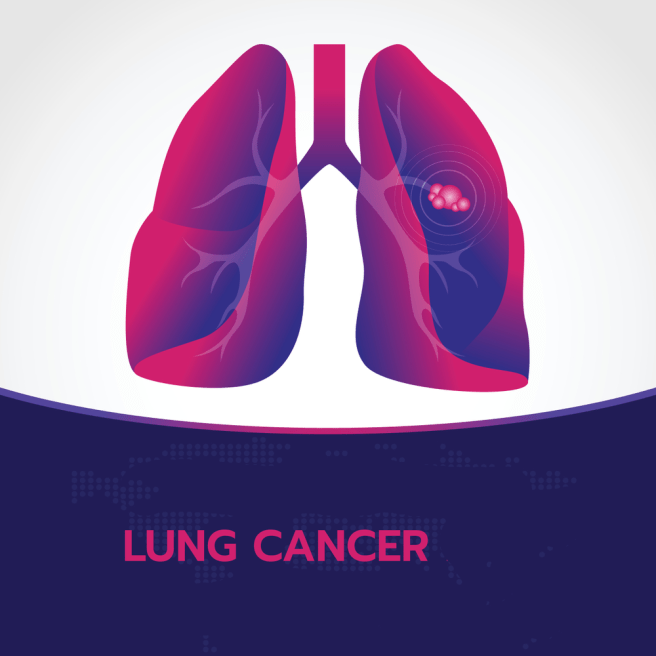
As the name suggests, lungs cancer is the type of cancer associated with the lungs. Most of the time the cancer cells forms in the outer surface of the lungs, which are known as adenocarcinomas. Sometimes it can spread from the passage of the respiratory tract. However, in both cases, the symptoms can be the same. Usually, doctors can get an idea about the stage of cancer after doing a CT scan. Fortis Cancer Institute is one the Leading Cancer treatment hospital in bangalore has the best team of cancer specialist , treats all types of cancer related problems.

Lungs Cancer

The prognosis of the lungs cancer

The patient may be having a worsening cough, which in some cases, result in phlegm coming out along with the blood. Some of the time the patient may get chest pain while breathing. The patient who is suffering from lungs cancer often faces weakness. The doctor may prescribe a quick weight check-up so as to measure the severity of the disease. Moreover, patients that are suffering from lungs cancer may have pneumonia as the cancer cells affect the respiratory tract quickly.

Diagnosis of Lungs cancer

If the doctor has some doubt, he can prescribe the patient to go through several tests. However, lungs cancer screening is generally offered by the doctor for the people who are older than 55 years and have a habit of smoking. The primary test to diagnose lungs cancer is imagining test. Many times, the small lesions in the lungs are not visible in the X-rays test then the doctor may advise for a CT scan. The doctor can also go for a biopsy test if he sees some abnormal growth in the lungs.

The life expectancy of the lungs cancer

Once cancer cells enter the bloodstream and lymph nodes, it is spread quickly in almost all parts of the body. There can be a better picture of treatment if the cancer is being diagnosed before it is spread to other body parts. Factors such as age, health, lifestyle are important to respond better to lungs cancer treatment. Most of the time, the early symptoms are overlooked. The survival picture is difficult to understand as a whole. The best guide can be an expert doctor. If the patient is under medication, it is seen that he can survive up to 24 months. Whereas, life expectancy without medication is only two to four months. Moreover, life expectancy completely varies upon the stage of cancer. If the cancer is being diagnosed at stage 4, so normally the chances of living more than 4 years are almost 1%, whereas the chances to live longer becomes higher to almost 45% in case of stage 1 diagnosed lungs cancer.

Conclusion

Lungs cancer whether non-smaller cell or smaller cell type, both can show some primary symptoms which are most of the time overlooked by the patient. The statistics show that lungs cancer is always being diagnosed at later stages. The chances of responding to medical treatment do depend on the patient’s lifestyle. There are more chances that a patient who is suffering from lungs cancer will have higher life expectancy if he is diagnosed at stage 1 but chances are almost negligible in case of stage 4 diagnosed lungs cancer. In today’s world, there are many lungs cancer treatment hospitals in bangalore which are now offering cost-efficient medical check-ups.

How da Vinci robotic surgery for cancer treatment is better than traditional surgery?

Many cancer patients need to undergo surgery during the process of their treatment. This surgery had been only manual until the late 1990s. After that, doctors all around the world, including oncologists at cancer hospital Bangalore, have increasingly depended upon da Vinci robotic surgery for removing tumors which are difficult to reach manually. This method reduces the time taken for surgery and diminish the side effects that are associated with traditional surgery.

What exactly is da Vinci robotic surgery?

Robotic surgery sounds like a robot will perform the operation, but it is not so. It is rather a robot-assisted surgery, in which doctors carry out the complex procedures in the surgery using robotic tools― with greater flexibility, precision, and control than they can in traditional techniques.

da vinci robotic surgery in India

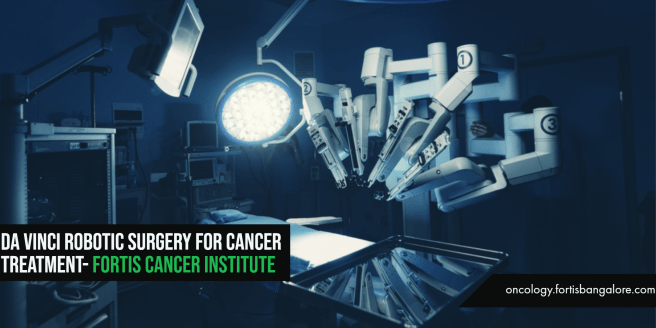
The da Vinci robotic surgery system mainly includes a camera arm and other mechanical arms which have surgical instruments connected to them. Generally, the arms have a laparoscope, while very small surgical instruments (that can fit into incisions less than 1 inch) are attached to other arms.

Robotic surgery technique is mostly used in minimally invasive surgeries where surgical procedures are performed through tiny incisions. Sometimes, robotic surgery also aids some conventional open surgeries.

These robotic arms are remotely controlled by a surgeon, who sits nearby and looks at a computer console which displays a magnified, high-definition and 3D view of the site of the tumor. He or she operates the arms using a joystick which imitates the wrist and hand movements of the surgeon and leads and assists the other surgeons involved in the operation.

Advantages of robotic surgery

Da Vinci robotic surgery system is available in cancer hospital Bangalore, and is not only recommended by doctors but is also sought after by cancer patients, because of its advantages and benefits over the traditional surgery system.

  1. Precision

The main advantage of robotic surgery is its capacity of enhanced precision, greater flexibility, and control during the surgery. Doctors have remarked that using the robotic surgery system, it has become easier to vividly see the site of the operation than it was in the case of traditional surgical procedure. Hence it has also become easier to carry out delicate, sensitive and complex procedures with far greater ease.

  1. Reach difficult locations

In addition to this, with the help of robotic arms, surgeons have been able to reach obscure parts of the body during surgery, which could not be reached manually. The robotic arms have greater dexterity and a greater range of movements which help doctors to carry out operations with increased precision.

  1. Safe surgery

Minimally invasive surgeries would not have been possible in most cases unless da Vinci robotic surgery system was employed. Hence, robotic surgery enables doctors and surgeons to carry out minimally invasive surgeries, which have a lot of benefits of their own. These benefits include less complications and infections post-surgery. Since the incision made is very small, the chances of complications and infections decrease and the patient has a better surgical experience. Also, minimally invasive surgery using a robotic system involves less pain than conventional open surgery procedures, and also lesser blood loss.

  1. Quicker recovery

One of the most impressive benefits of minimally invasive surgery using a robotic system that attracts cancer patients is the quicker recovery time involved. In these surgeries, the patient recovers quicker than in traditional open surgeries and thus has to experience a lesser hospital stay. Also, the scars that appear as a result of the surgery are much smaller, and less noticeable, too.

Thus, in general, da Vinci robotic surgery for cancer treatment is better than traditional open surgery in a number of aforementioned ways. However, before you decide to undergo robotic surgery it is essential that you find a reputed and experienced surgeon at cancer hospital in  Bangalore and see if your case is suitable for robotic surgery.

FAQ,S :

[1]10 Facts about Robotic Surgery for Cancer Treatment